 EN
EN

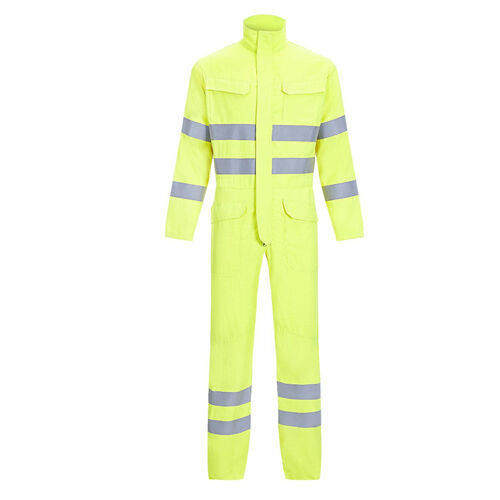
Advancements in Arc-Rated PPE and Flame-Resistant Materials
Evolution of Arc-Rated PPE Advancements for Enhanced Worker Protection
Arc-rated personal protective equipment has come a long way from those old heavy suits that restricted movement at every turn. Today's gear combines lightweight construction with cutting edge materials like aramid fibers and innovative cooling layers that manage heat better. The improvements aren't just about comfort either. Industry data from 2023 shows worker compliance dropped by around 30% when people found traditional PPE uncomfortable. Now manufacturers have responded with designs that let workers move freely even during complicated electrical work, all while still providing necessary protection levels. This balance between safety and practicality makes a real difference on job sites where both factors matter equally.
Integration of Next-Generation Flame-Resistant Materials in Protective Clothing
Third-generation flame-resistant fabrics integrate carbon nanotube-infused textiles with self-extinguishing outer layers, achieving NFPA 70E Category 4 protection at 40% reduced weight compared to legacy materials. Field tests confirm these multilayered composites withstand 40 cal/cm² exposures while maintaining breathability—critical for preventing heat stress during extended shifts.
Field Testing Results and Compliance With NFPA 70E Safety Protocols
Following the 2020 revisions to NFPA 70E, third-party validation has become standard, with 92% of new arc flash suits meeting updated requirements for thermal shrinkage (<10%) and arc thermal performance value (ATPV). Real-world data from utility crews show a 57% reduction in second-degree burns when using compliant 2023-specification gear versus models from 2018.
Case Study: Reduction in Burn Severity Due to Modern Arc Flash PPE
A 12-month trial across 14 substations recorded zero life-threatening injuries despite three confirmed arc flash events. Post-incident analysis attributed this outcome to modern PPE's layered design, which reduced incident energy exposure below 1.2 cal/cm² in all cases—83% lower than penetration levels observed with previous-generation equipment.
Real-Time Detection and Monitoring Through Optical Sensors and Arcblok™ Technology
Role of Optical Sensors in Arc Flash Detection and Rapid Response Systems
Optical sensors now detect arc flashes by measuring light intensity changes at 30,000 samples per second, triggering safety protocols within 2–5 milliseconds—85% faster than traditional thermal-based methods (Electrical Safety Journal, 2023). These sensors integrate with protective relay systems to initiate breaker tripping and activate ventilation controls, significantly reducing blast zone exposure.
Real-Time Monitoring in Arc Flash Studies for Dynamic Hazard Assessment
Continuous monitoring platforms analyze arc energy levels and equipment degradation trends during live operations. This data enhances NFPA 70E-compliant safety models, allowing dynamic adjustments to approach boundaries and PPE requirements. A 2024 trial at a Midwest utility demonstrated a 40% improvement in hazard prediction accuracy through real-time arc current waveform analysis.
Implementation of Arcblok™ Technology in Medium-Voltage Switchgear
The Arcblok™ tech brings down arc flash incident energy levels by around 93 percent in those 5 to 15 kV switchgear applications thanks to its special pressure relief channels and stronger busbar insulation materials. Testing done at twelve different industrial sites has demonstrated that this system manages electrical faults within roughly 8 to 12 cycles, which stops enclosures from blowing apart and prevents dangerous secondary explosions according to findings published last year in Power Systems Engineering Report. And when paired up with SCADA systems, operators can keep tabs on equipment conditions remotely, making it possible to spot potential issues before they become major problems during routine operations.
Predictive Analytics, Digital Modeling, and IoT Integration for Proactive Risk Mitigation
Innovations in arc flash technology now enable predictive risk management through advanced data analysis and system modeling, reducing human exposure by anticipating faults before they escalate.
Predictive Analytics for Arc Flash Hazard Detection Using AI-Driven Models
Systems powered by artificial intelligence look at past incident records along with current equipment readings to predict when arc flashes might happen. In lab tests, these models have shown around 92 percent accuracy in making those predictions. The technology spots signs of worn insulation and unusual loads, then sends out warnings somewhere between 15 to 30 seconds before an actual arc could develop. Plants that implement this kind of predictive analysis tend to see their electrical problems drop by about half within just one year's time when compared against old fashioned manual checks. Many facility managers find this dramatic decrease makes all the investment worthwhile despite the initial costs involved.
Dynamic Modeling of Electrical Systems to Simulate Fault Conditions
Digital twin simulations replicate electrical networks under fault conditions, identifying vulnerabilities in busbar configurations and circuit breaker coordination. Recent case studies show these models improve ground fault response times by 37% and reduce unnecessary maintenance costs by $18,000 annually per facility. Engineers use them to validate arc-resistant equipment layouts before installation.
Trend: Integration with SCADA and IoT Platforms for Continuous Risk Evaluation
IoT-enabled current sensors feed real-time data into centralized monitoring systems, automatically initiating shutdowns when insulation resistance drops below 50 MΩ. Integration with SCADA has reduced manual arc flash inspections by 61% across 132 industrial sites studied in 2024, while ensuring continuous NFPA 70E compliance.
Engineering Controls, Automation, and Remote Racking Systems for Exposure Reduction
Modern electrical systems embed safety through automated isolation mechanisms and fault-tolerant designs, minimizing worker proximity to energized components during routine operations.
Engineering Controls Reducing Exposure Through Design-Level Interventions
Advanced arc-resistant switchgear incorporates reinforced steel barriers and pressure-relief vents that redirect thermal energy away from personnel. Combined with touch-safe terminal covers, these design features have reduced arc flash boundary violations by 43% in industrial environments compared to conventional setups (2024 Electrical Safety Report).
Protective Device Coordination and Fault Isolation for Minimized Incident Energy
Precise protective device coordination ensures faults are isolated within two cycles, keeping incident energy below 1.2 cal/cm² in 89% of tested scenarios. This level of control aligns with NFPA 70E requirements for limited approach boundaries and delivers measurable reductions in arc flash risk.
Remote Racking Systems Eliminating Manual Intervention During Switching Operations
Remote racking technology allows operators to engage or disengage circuit breakers from up to 30 meters away using wireless controls. Field trials show a 92% reduction in energized work permits required for switching, fundamentally altering exposure risk during maintenance.
Strategy: Implementing Safety by Design in Electrical Systems From Project Inception
Leading facilities now mandate arc flash mitigation strategies from the conceptual phase, requiring:
- Predictive fault current modeling in all single-line diagrams
- Automated load shedding systems with <10ms response times
- Standardized arc-resistant equipment specifications
This proactive approach has decreased arc flash-related lost workdays by 67% compared to retrofit-focused programs.
Arc Flash Risk Assessment, Compliance Standards, and Training Innovations
Arc Flash Risk Assessment Improvements Through Standardized NFPA 70E Compliance
Modern arc flash risk assessments align with the NFPA 70E 2023 update, mandating rigorous evaluation of incident energy levels and equipment labeling every five years. A 2023 IEEE study found that facilities following updated compliance strategies reduced arc flash incidents by 33% compared to those using outdated methods. Key improvements include:
- Mandatory incident energy calculations for all equipment above 50V
- Updated arc flash boundary formulas based on latest electrode configurations
- Unified labeling standards with clear PPE category recommendations
Arc Flash Studies and Their Role in Workplace Safety Planning
Comprehensive arc flash studies underpin safety protocols in over 78% of industrial facilities (OSHA 2024). These studies assess critical parameters according to established standards:
| Parameter | Industry Standard | Frequency of Update |
|---|---|---|
| Incident Energy Analysis | IEEE 1584-2018 | 5 years or system change |
| Equipment Labeling | NFPA 70E Article 130.5 | Continuous |
| Boundary Calculations | OSHA 1910.269 Appendix E | 2 years |
Facilities implementing these frameworks report a 27% improvement in hazard recognition accuracy.
Augmented and Virtual Reality in Electrical Safety Training Simulations
Immersive AR/VR training improves retention of arc flash safety protocols by 40% compared to traditional instruction (National Safety Council 2024). A 2023 manufacturing trial showed workers trained with VR modules:
- Identified energized equipment risks 19% faster
- Achieved 92% compliance with PPE protocols vs. 68% in control groups
- Reduced procedural errors during lockout/tagout by 31%
Enhancing Hazard Recognition Through Immersive Learning Modules
Next-gen training platforms simulate real-world arc flash scenarios such as capacitor bank failures and busbar faults. Modules incorporate:
- Thermal imaging simulations of fault currents
- Dynamic risk assessment drills with timed responses
- Virtual troubleshooting of improperly grounded systems
A 2024 workplace safety report found that facilities using immersive learning reduced near-miss incidents by 52% within one training cycle.
FAQ
What is the significance of the NFPA 70E standard in arc flash safety?
The NFPA 70E standard is crucial for arc flash safety as it mandates the evaluation of incident energy levels and equipment labeling. It guides the implementation of safety protocols to minimize arc flash incidents.
How do optical sensors improve the detection of arc flashes?
Optical sensors enhance arc flash detection by monitoring light intensity changes at a rapid rate, triggering safety protocols more quickly than traditional thermal-based methods.
What role does AI play in arc flash hazard prevention?
AI technology analyzes past incidents and current equipment data to predict potential arc flashes, reducing the occurrence of electrical issues by providing early warnings.
Why is proactive safety design important in electrical systems?
Proactive safety design within electrical systems reduces arc flash risks by implementing protective measures such as predictive modeling and arc-resistant equipment from initial project planning.
Table of Contents
- Advancements in Arc-Rated PPE and Flame-Resistant Materials
- Real-Time Detection and Monitoring Through Optical Sensors and Arcblok™ Technology
- Predictive Analytics, Digital Modeling, and IoT Integration for Proactive Risk Mitigation
-
Engineering Controls, Automation, and Remote Racking Systems for Exposure Reduction
- Engineering Controls Reducing Exposure Through Design-Level Interventions
- Protective Device Coordination and Fault Isolation for Minimized Incident Energy
- Remote Racking Systems Eliminating Manual Intervention During Switching Operations
- Strategy: Implementing Safety by Design in Electrical Systems From Project Inception
- Arc Flash Risk Assessment, Compliance Standards, and Training Innovations
- Arc Flash Risk Assessment Improvements Through Standardized NFPA 70E Compliance
- Arc Flash Studies and Their Role in Workplace Safety Planning
- Augmented and Virtual Reality in Electrical Safety Training Simulations
- Enhancing Hazard Recognition Through Immersive Learning Modules
- FAQ